CHALK TALK
CHALK TALK
CHALK TALK
Jan – March 2025 | A community-building installation in downtown Davis
Jan – March 2025 | A community-building installation in downtown Davis
Jan – March 2025 | A community-building installation in downtown Davis
Figma
Adobe Illustrator
Laser Cutter
Google Suite
Figma
Adobe Illustrator
Laser Cutter
Google Suite
Figma
Adobe Illustrator
Laser Cutter
Google Suite
UX Writer
UX Designer
UX Writer
UX Designer
UX Writer
UX Designer
6 weeks
6 weeks
6 weeks
OVERVIEW
OVERVIEW
OVERVIEW
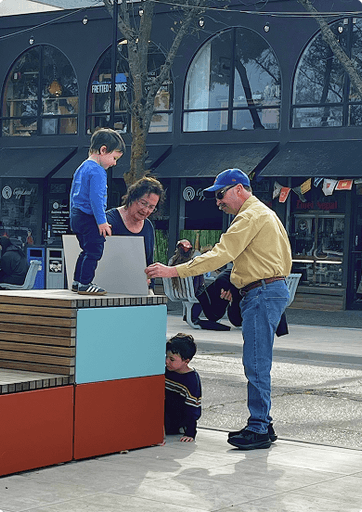
“Chalk Talk” is a project that I worked on with the City of Davis as part of my Human-Centered Design class. Our challenge was to “Make the G-Street corridor a community hub for the City of Davis,” the mayor’s vision for the City of Davis. We worked in teams of four and used Design Thinking to deliver a meaningful response to the challenge.
“Chalk Talk” is a project that I worked on with the City of Davis as part of my Human-Centered Design class. Our challenge was to “Make the G-Street corridor a community hub for the City of Davis,” the mayor’s vision for the City of Davis. We worked in teams of four and used Design Thinking to deliver a meaningful response to the challenge.
“Chalk Talk” is a project that I worked on with the City of Davis as part of my Human-Centered Design class. Our challenge was to “Make the G-Street corridor a community hub for the City of Davis,” the mayor’s vision for the City of Davis. We worked in teams of four and used Design Thinking to deliver a meaningful response to the challenge.
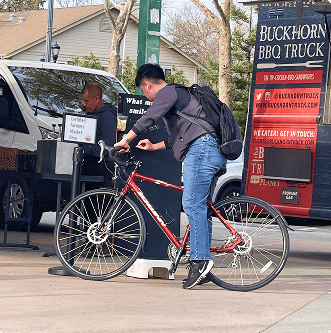
The G-Street corridor was recently renovated and opened to the public early this quarter. Eager to gather feedback on their renovations and encourage greater use of the space, the City hired us to talk to the community, assess the impact, and design solutions that would further enhance the liveliness of the space.
The G-Street corridor was recently renovated and opened to the public early this quarter. Eager to gather feedback on their renovations and encourage greater use of the space, the City hired us to talk to the community, assess the impact, and design solutions that would further enhance the liveliness of the space.
The G-Street corridor was recently renovated and opened to the public early this quarter. Eager to gather feedback on their renovations and encourage greater use of the space, the City hired us to talk to the community, assess the impact, and design solutions that would further enhance the liveliness of the space.
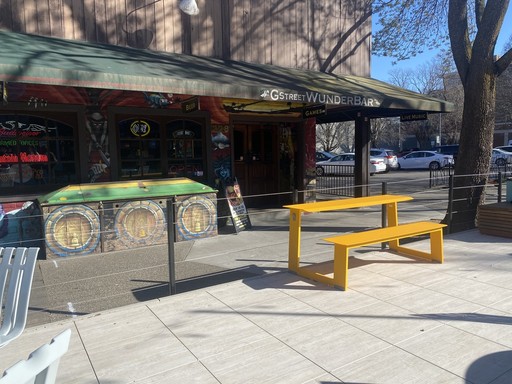
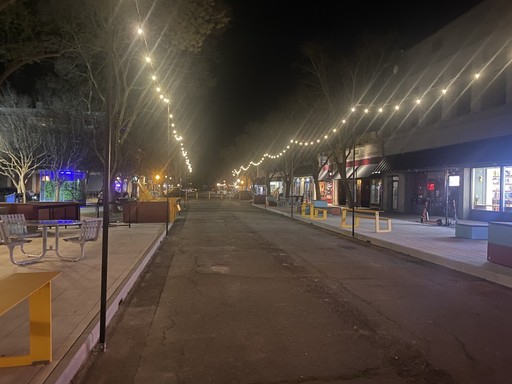
We used Design Thinking to tackle this problem. After setting the project frame to "Make the G-street Corridor a community hub for the City of Davis," we set off to find a solution.
We used Design Thinking to tackle this problem. After setting the project frame to "Make the G-street Corridor a community hub for the City of Davis," we set off to find a solution.
We used Design Thinking to tackle this problem. After setting the project frame to "Make the G-street Corridor a community hub for the City of Davis," we set off to find a solution.
CONTEXT
CONTEXT
CONTEXT
EMPATHIZE
+ DEFINE
EMPATHIZE + DEFINE
EMPATHIZE + DEFINE
Our first step was to go into the Davis community to understand their needs, values, and opinions. We interviewed a total of 10 community members. Our approach was rooted in cultural consensus theory (CCT), and involved going deep on a small number of interviewees to uncover significant themes.
Our first step was to go into the Davis community to understand their needs, values, and opinions. We interviewed a total of 10 community members. Our approach was rooted in cultural consensus theory (CCT), and involved going deep on a small number of interviewees to uncover significant themes.
Our first step was to go into the Davis community to understand their needs, values, and opinions. We interviewed a total of 10 community members. Our approach was rooted in cultural consensus theory (CCT), and involved going deep on a small number of interviewees to uncover significant themes.
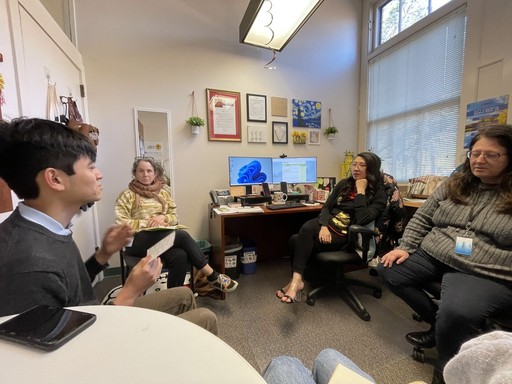
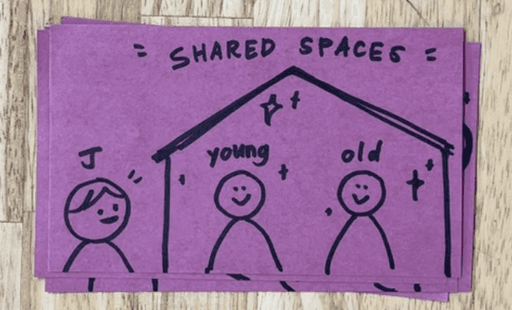
From our interviews, we learned that people saw Davis as divided into three communities: students, families, and senior residents. Moreover, senior residents felt the City focused on students, causing them to feel left behind. Recognizing this disconnect, we chose to focus our project on “Bridging the intergenerational gap” using the G-street space.
From our interviews, we learned that people saw Davis as divided into three communities: students, families, and senior residents. Moreover, senior residents felt the City focused on students, causing them to feel left behind. Recognizing this disconnect, we chose to focus our project on “Bridging the intergenerational gap” using the G-street space.
From our interviews, we learned that people saw Davis as divided into three communities: students, families, and senior residents. Moreover, senior residents felt the City focused on students, causing them to feel left behind. Recognizing this disconnect, we chose to focus our project on “Bridging the intergenerational gap” using the G-street space.
Next, we generated hundreds of ideas in a brainstorming session and categorized them into groups. This allowed us to move beyond obvious solutions and explore more innovative approaches to the challenge.
Next, we generated hundreds of ideas in a brainstorming session and categorized them into groups. This allowed us to move beyond obvious solutions and explore more innovative approaches to the challenge.
Next, we generated hundreds of ideas in a brainstorming session and categorized them into groups. This allowed us to move beyond obvious solutions and explore more innovative approaches to the challenge.
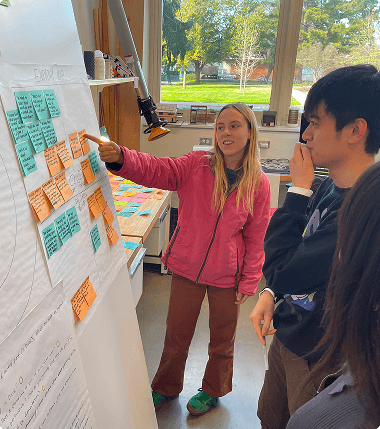
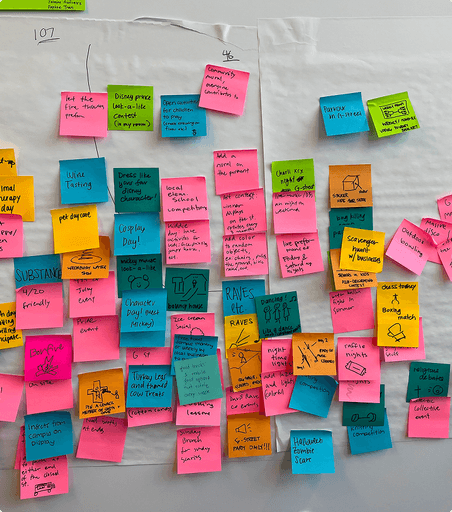
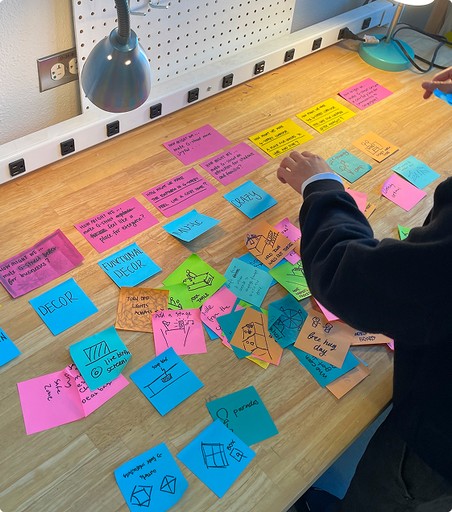
After sketching, sorting, and deliberating our ideas, we landed on a community chalkboard. This idea stood out as feasible within our given timeframe and effective at creating community through storytelling. With confidence in our direction, we moved to the prototyping stage.
After sketching, sorting, and deliberating our ideas, we landed on a community chalkboard. This idea stood out as feasible within our given timeframe and effective at creating community through storytelling. With confidence in our direction, we moved to the prototyping stage.
After sketching, sorting, and deliberating our ideas, we landed on a community chalkboard. This idea stood out as feasible within our given timeframe and effective at creating community through storytelling. With confidence in our direction, we moved to the prototyping stage.
IDEATE
IDEATE
IDEATE
PROTOTYPE
+ TEST
PROTOTYPE + TEST
PROTOTYPE + TEST
We built our prototype using materials sourced from art supply closets, Facebook Marketplace, and leftover supplies from other classes. Using the school's prototyping lab, I laser-cut a stencil and painted letters onto plywood. Finally, we cut and taped a chalk box to create a chalk holder.
We built our prototype using materials sourced from art supply closets, Facebook Marketplace, and leftover supplies from other classes. Using the school's prototyping lab, I laser-cut a stencil and painted letters onto plywood. Finally, we cut and taped a chalk box to create a chalk holder.
We built our prototype using materials sourced from art supply closets, Facebook Marketplace, and leftover supplies from other classes. Using the school's prototyping lab, I laser-cut a stencil and painted letters onto plywood. Finally, we cut and taped a chalk box to create a chalk holder.
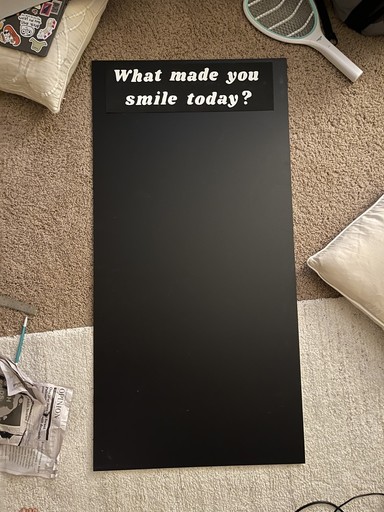
Over the following weeks, we tested our chalkboard in locations around downtown Davis. Through observations and intercepts, we learned that the chalkboard could spawn meaningful interactions even for those who didn't write on it. For instance, we witnessed a middle-aged couple turn to each other and ask, "So, what made you smile today?" These observations, along with simple counts and statistics, gave us confidence in the effectiveness of our concept.
Over the following weeks, we tested our chalkboard in locations around downtown Davis. Through observations and intercepts, we learned that the chalkboard could spawn meaningful interactions even for those who didn't write on it. For instance, we witnessed a middle-aged couple turn to each other and ask, "So, what made you smile today?" These observations, along with simple counts and statistics, gave us confidence in the effectiveness of our concept.
Over the following weeks, we tested our chalkboard in locations around downtown Davis. Through observations and intercepts, we learned that the chalkboard could spawn meaningful interactions even for those who didn't write on it. For instance, we witnessed a middle-aged couple turn to each other and ask, "So, what made you smile today?" These observations, along with simple counts and statistics, gave us confidence in the effectiveness of our concept.
After unpacking our findings, we compiled our insights into a presentation which we gave to the City Board. We guided them through our Design Thinking process, showing how we moved from user needs towards a practical solution supported by real, empirical data.
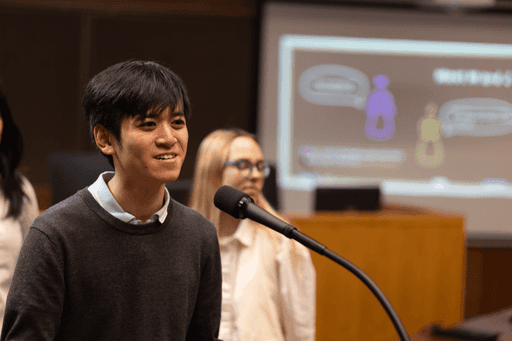
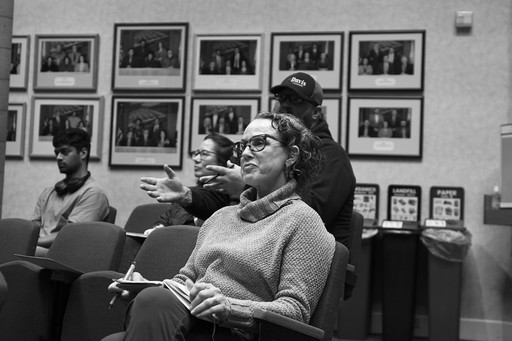
The City Board was impressed with our solution, particularly how we anticipated their concerns around theft and vandalism and addressed them in our presentation. Afterwards, they gave us their business cards and invited us to collaborate on the implementation of the project :).
PRESENTATION
After unpacking our findings, we compiled our insights into a presentation which we gave to the City Board. We guided them through our Design Thinking process, showing how we moved from user needs towards a practical solution supported by real, empirical data.
The City Board was impressed with our solution, particularly how we anticipated their concerns around theft and vandalism and addressed them in our presentation. Afterwards, they gave us their business cards and invited us to collaborate on the implementation of the project :).
PRESENTATION
After unpacking our findings, we compiled our insights into a presentation which we gave to the City Board. We guided them through our Design Thinking process, showing how we moved from user needs towards a practical solution supported by real, empirical data.
The City Board was impressed with our solution, particularly how we anticipated their concerns around theft and vandalism and addressed them in our presentation. Afterwards, they gave us their business cards and invited us to collaborate on the implementation of the project :).
PRESENTATION
TAKE-
AWAYS
TAKEAWAYS
TAKEAWAYS
This was a deeply rewarding project that opened my eyes to how design could be used to drive change in a logical, human-centered way. Here are some of my key takeaways:
This was a deeply rewarding project that opened my eyes to how design could be used to drive change in a logical, human-centered way. Here are some of my key takeaways:
This was a deeply rewarding project that opened my eyes to how design could be used to drive change in a logical, human-centered way. Here are some of my key takeaways:
Embrace criticism and be open to possibilities. There were times throughout this project when my ideas were rejected or proven wrong. Had I been overly defensive, I would have missed important insights. Through this project, I learned that listening and thoughtful adaptation are keys to being a good designer.
Collect empirical evidence. Quotes from real users, photos of interaction with a prototype, and simple metrics help elevate ideas from hypotheticals to actionable, data-backed proposals. They transform design from something perceived as idealistic to something practical and closely aligned with the real world.
Anticipate and address business factors when pitching ideas. When leading with design, it is important to address business and logistical factors that influence a project. This frames the project as well thought out and feasible, which helps gain buy-in from stakeholders.
Embrace criticism and be open to possibilities. There were times throughout this project when my ideas were rejected or proven wrong. Had I been overly defensive, I would have missed important insights. Through this project, I learned that listening and thoughtful adaptation are keys to being a good designer.
Collect empirical evidence. Quotes from real users, photos of interaction with a prototype, and simple metrics help elevate ideas from hypotheticals to actionable, data-backed proposals. They transform design from something perceived as idealistic to something practical and closely aligned with the real world.
Anticipate and address business factors when pitching ideas. When leading with design, it is important to address business and logistical factors that influence a project. This frames the project as well thought out and feasible, which helps gain buy-in from stakeholders.
Embrace criticism and be open to possibilities. There were times throughout this project when my ideas were rejected or proven wrong. Had I been overly defensive, I would have missed important insights. Through this project, I learned that listening and thoughtful adaptation are keys to being a good designer.
Collect empirical evidence. Quotes from real users, photos of interaction with a prototype, and simple metrics help elevate ideas from hypotheticals to actionable, data-backed proposals. They transform design from something perceived as idealistic to something practical and closely aligned with the real world.
Anticipate and address business factors when pitching ideas. When leading with design, it is important to address business and logistical factors that influence a project. This frames the project as well thought out and feasible, which helps gain buy-in from stakeholders.
OTHER PROJECTS
OTHER PROJECTS
OTHER PROJECTS


Lucas Wang 2025 ©