SLING FIGHTER
SLING FIGHTER
SLING FIGHTER
Feb – March 2024 | An arcade boxing game made in 6 weeks
Feb – March 2024 | An arcade boxing game made in 6 weeks
Feb – March 2024 | An arcade boxing game made in 6 weeks
Unity 3D
GitHub
Google Suite
TeamGantt
Unity 3D
GitHub
Google Suite
TeamGantt
Unity 3D
GitHub
Google Suite
TeamGantt
Producer
Game Logic (Backend)
Producer
Game Logic (Backend)
Producer
Game Logic (Backend)
6 weeks
6 weeks
6 weeks
OVERVIEW
OVERVIEW
OVERVIEW
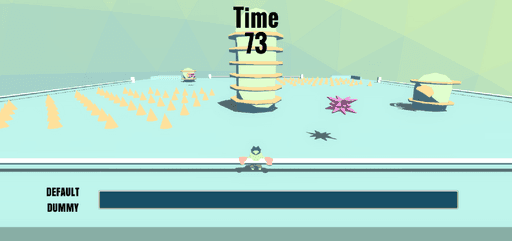
Sling Fighter was my final project for Gameplay Programming, a game development class I took during my junior year. Leveraging my previous experience in game development, I took on the role of Producer and worked on backend game logic. Within the six weeks, our team was able to develop a game that creatively interpreted the project theme, “Roll with the punches.” Later, our game received recognition for Polish and Game Feel at the end-of-quarter showcase.
Sling Fighter was my final project for Gameplay Programming, a game development class I took during my junior year. Leveraging my previous experience in game development, I took on the role of Producer and worked on backend game logic. Within the six weeks, our team was able to develop a game that creatively interpreted the project theme, “Roll with the punches.” Later, our game received recognition for Polish and Game Feel at the end-of-quarter showcase.
Sling Fighter was my final project for Gameplay Programming, a game development class I took during my junior year. Leveraging my previous experience in game development, I took on the role of Producer and worked on backend game logic. Within the six weeks, our team was able to develop a game that creatively interpreted the project theme, “Roll with the punches.” Later, our game received recognition for Polish and Game Feel at the end-of-quarter showcase.
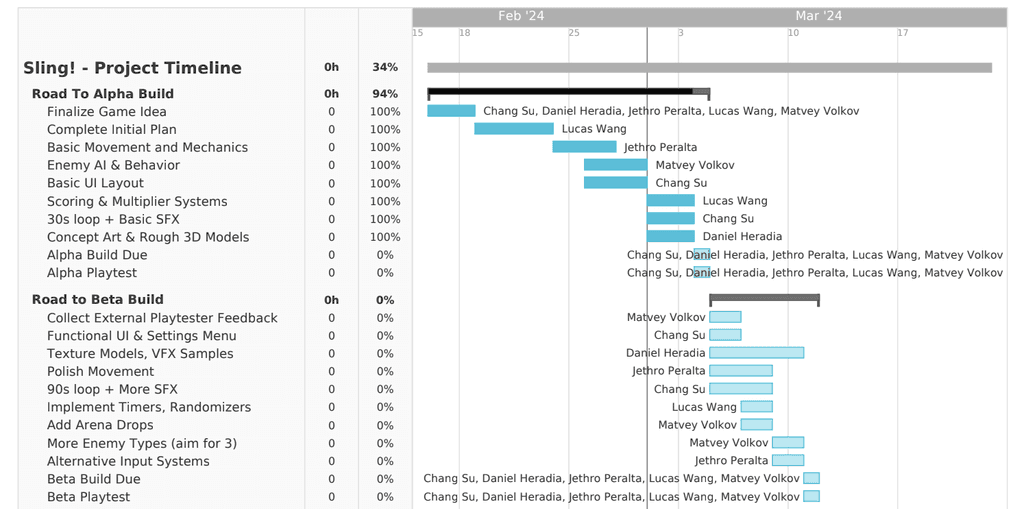
As Producer, I managed the project’s technical dependencies and oversaw the logistics of our team’s workflow. During our first meeting, I set up a Gantt chart to outline the project timeline and ensure everyone was aware of key deadlines. This approach helped us stay on track, justify internal deadlines, and focus on the bigger picture over the six-week period.
As Producer, I managed the project’s technical dependencies and oversaw the logistics of our team’s workflow. During our first meeting, I set up a Gantt chart to outline the project timeline and ensure everyone was aware of key deadlines. This approach helped us stay on track, justify internal deadlines, and focus on the bigger picture over the six-week period.
As Producer, I managed the project’s technical dependencies and oversaw the logistics of our team’s workflow. During our first meeting, I set up a Gantt chart to outline the project timeline and ensure everyone was aware of key deadlines. This approach helped us stay on track, justify internal deadlines, and focus on the bigger picture over the six-week period.
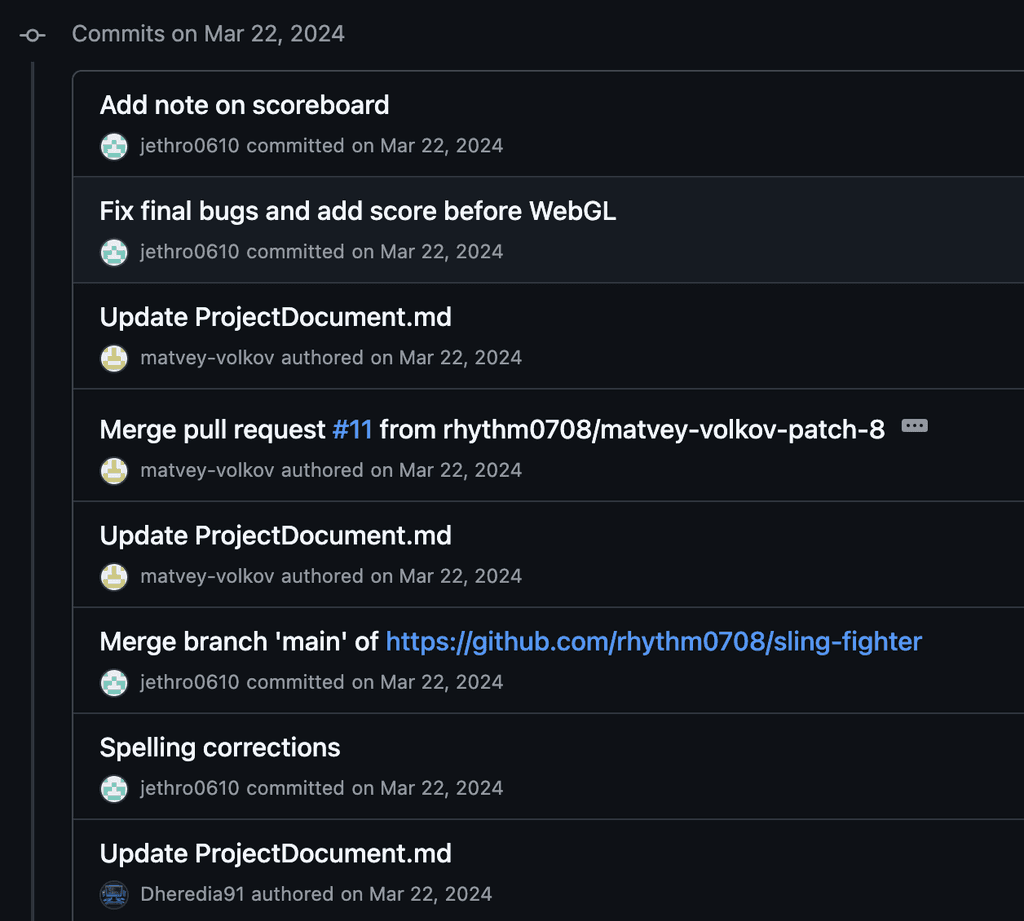
I streamlined our collaboration using a GitHub repo. I used branches to store milestone builds and advised my team to do the same when making big changes. I merged relevant branches before our weekly meetings and resolved merge conflicts, ensuring that we always had a stable version to critique. Regular meetings ensured that we were aligned on progress and understood how our work fit into the bigger picture. They helped our team stay motivated and fueled ongoing discussions about how to make the game better.
I streamlined our collaboration using a GitHub repo. I used branches to store milestone builds and advised my team to do the same when making big changes. I merged relevant branches before our weekly meetings and resolved merge conflicts, ensuring that we always had a stable version to critique. Regular meetings ensured that we were aligned on progress and understood how our work fit into the bigger picture. They helped our team stay motivated and fueled ongoing discussions about how to make the game better.
I streamlined our collaboration using a GitHub repo. I used branches to store milestone builds and advised my team to do the same when making big changes. I merged relevant branches before our weekly meetings and resolved merge conflicts, ensuring that we always had a stable version to critique. Regular meetings ensured that we were aligned on progress and understood how our work fit into the bigger picture. They helped our team stay motivated and fueled ongoing discussions about how to make the game better.
LOGISTICS
LOGISTICS
LOGISTICS
PRODUCT-
-ION
PRODUCTION
PRODUCTION
Our team’s approach was to make a playable game as soon as possible, then spend the rest of the time refining and experimenting with systems. Each meeting, we set goals for each member that built on core mechanics. This approach enabled us to have a full game loop by our alpha deadline, introduce score, multipliers, and obstacles by the beta, and deliver a tightly focused experience with clear, impactful mechanics for the final showcase.
Our team’s approach was to make a playable game as soon as possible, then spend the rest of the time refining and experimenting with systems. Each meeting, we set goals for each member that built on core mechanics. This approach enabled us to have a full game loop by our alpha deadline, introduce score, multipliers, and obstacles by the beta, and deliver a tightly focused experience with clear, impactful mechanics for the final showcase.
Our team’s approach was to make a playable game as soon as possible, then spend the rest of the time refining and experimenting with systems. Each meeting, we set goals for each member that built on core mechanics. This approach enabled us to have a full game loop by our alpha deadline, introduce score, multipliers, and obstacles by the beta, and deliver a tightly focused experience with clear, impactful mechanics for the final showcase.
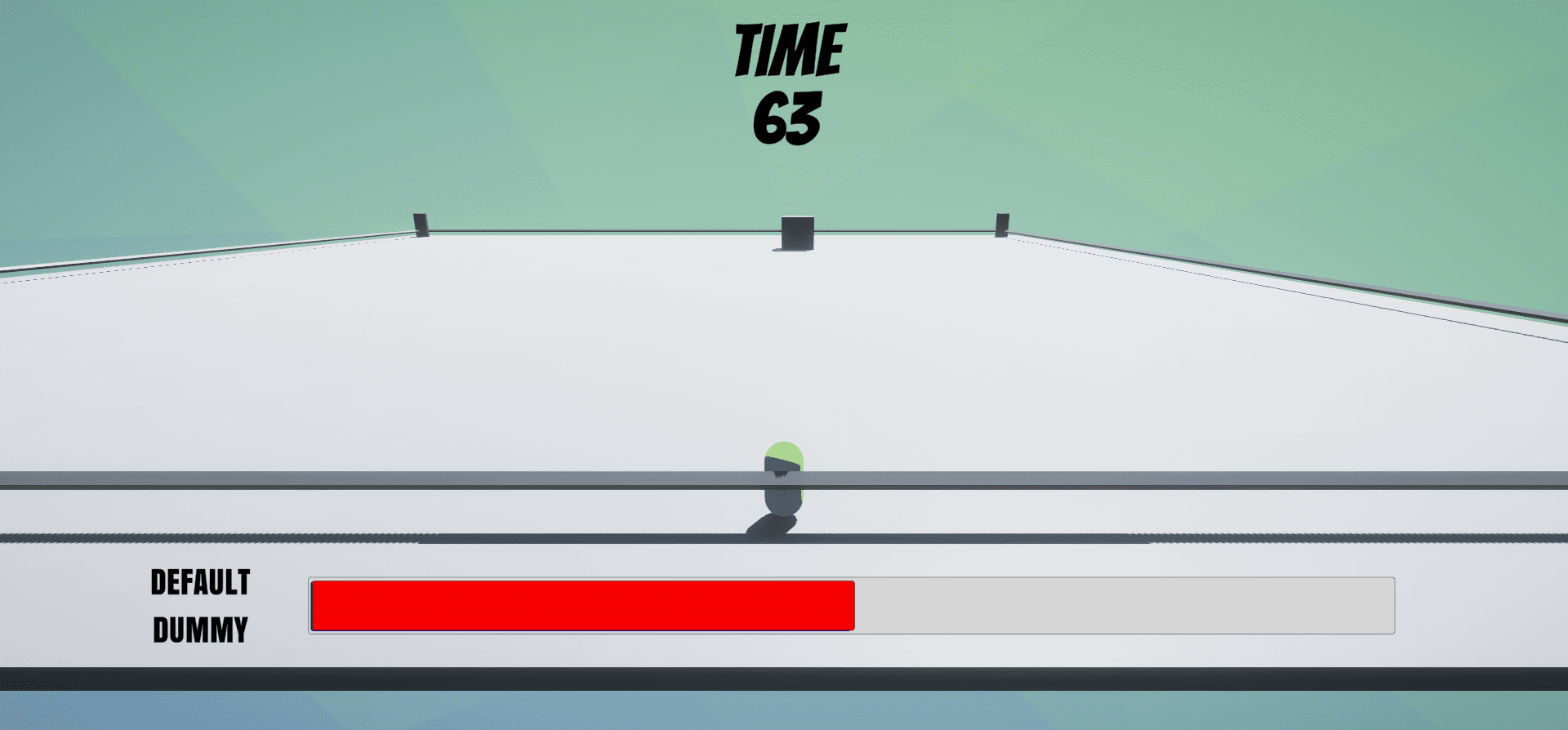
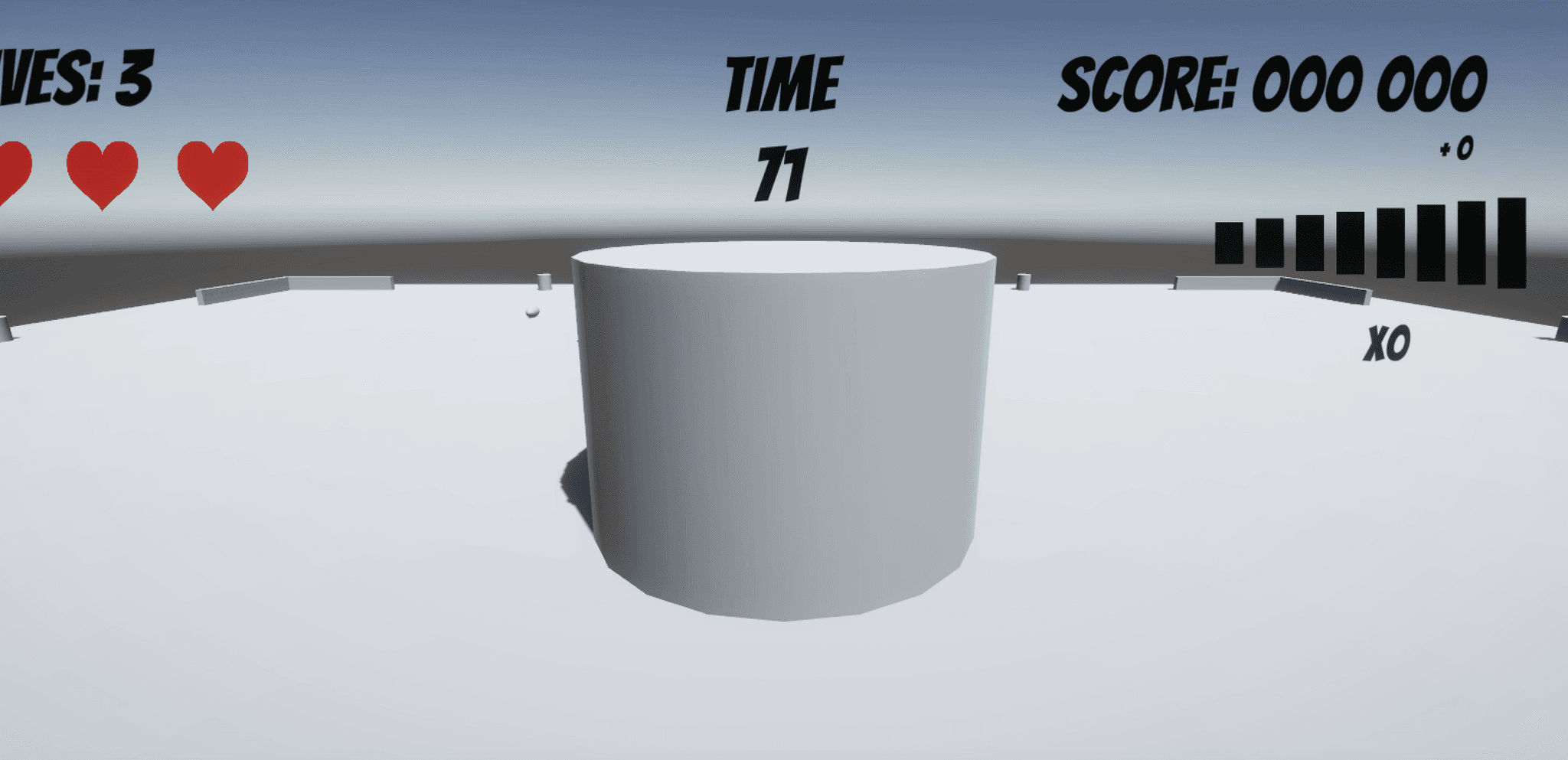
On the programming side, I was responsible for backend game logic, including score, time, health, and randomization. This role required me to collaborate closely with Matvey (frontend game logic) and Chang (UI) to create compelling systems that were effectively communicated on the HUD.
On the programming side, I was responsible for backend game logic, including score, time, health, and randomization. This role required me to collaborate closely with Matvey (frontend game logic) and Chang (UI) to create compelling systems that were effectively communicated on the HUD.
On the programming side, I was responsible for backend game logic, including score, time, health, and randomization. This role required me to collaborate closely with Matvey (frontend game logic) and Chang (UI) to create compelling systems that were effectively communicated on the HUD.
During Finals Week, we showcased our game to peers, visitors, and professors at a small event, where it stood out as a game with a clear goal, polish, and even controller support. Later, we even learned that Sling Fighter! had been selected as an exemplar for future iterations of the class. Our team ended the project on good terms and even stayed in touch after the quarter ended.
During Finals Week, we showcased our game to peers, visitors, and professors at a small event, where it stood out as a game with a clear goal, polish, and even controller support. Later, we even learned that Sling Fighter! had been selected as an exemplar for future iterations of the class. Our team ended the project on good terms and even stayed in touch after the quarter ended.
During Finals Week, we showcased our game to peers, visitors, and professors at a small event, where it stood out as a game with a clear goal, polish, and even controller support. Later, we even learned that Sling Fighter! had been selected as an exemplar for future iterations of the class. Our team ended the project on good terms and even stayed in touch after the quarter ended.
SHOWCASE
SHOWCASE
SHOWCASE
TAKE-
AWAYS
TAKEAWAYS
TAKEAWAYS
Here are some of my most important takeaways for this project.
Here are some of my most important takeaways for this project.
Here are some of my most important takeaways for this project.
Managing a technical project. Through this project, I gained hands-on experience using GitHub, Google Suite, and other organizational tools to coordinate a team, track progress, and do version control. I learned that good project management does not necessarily use the most advanced tools—it simply selects the strategies that best suit the team’s needs and workflow.
Fostering open dialogue. In past projects, I had struggled to create an environment where everyone felt comfortable sharing ideas. This time, I refined my leadership to focus on facilitating productive discussions without overstepping. This approach led to stronger insights and broader group commitment to the project which strengthened our final game.
Align the team around a shared vision. Setting clear goals and expectations helped our team focus on the bigger picture and navigate minor setbacks. While I had generally understood this idea in theory, witnessing its impact on our group’s cohesion was both surprising and rewarding.
Managing a technical project. Through this project, I gained hands-on experience using GitHub, Google Suite, and other organizational tools to coordinate a team, track progress, and do version control. I learned that good project management does not necessarily use the most advanced tools—it simply selects the strategies that best suit the team’s needs and workflow.
Fostering open dialogue. In past projects, I had struggled to create an environment where everyone felt comfortable sharing ideas. This time, I refined my leadership to focus on facilitating productive discussions without overstepping. This approach led to stronger insights and broader group commitment to the project which strengthened our final game.
Align the team around a shared vision. Setting clear goals and expectations helped our team focus on the bigger picture and navigate minor setbacks. While I had generally understood this idea in theory, witnessing its impact on our group’s cohesion was both surprising and rewarding.
Managing a technical project. Through this project, I gained hands-on experience using GitHub, Google Suite, and other organizational tools to coordinate a team, track progress, and do version control. I learned that good project management does not necessarily use the most advanced tools—it simply selects the strategies that best suit the team’s needs and workflow.
Fostering open dialogue. In past projects, I had struggled to create an environment where everyone felt comfortable sharing ideas. This time, I refined my leadership to focus on facilitating productive discussions without overstepping. This approach led to stronger insights and broader group commitment to the project which strengthened our final game.
Align the team around a shared vision. Setting clear goals and expectations helped our team focus on the bigger picture and navigate minor setbacks. While I had generally understood this idea in theory, witnessing its impact on our group’s cohesion was both surprising and rewarding.
OTHER PROJECTS
OTHER PROJECTS
OTHER PROJECTS
Lucas Wang 2025 ©